
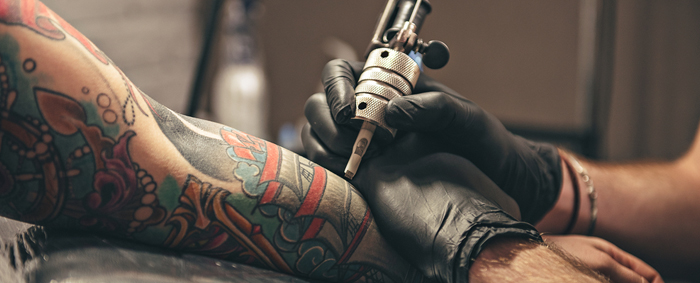
How to Pull Clean Tattoo Lines: A Practical Guide to Crisp Linework
A clean line is the signature of a confident artist. It’s the first thing a fellow tattooer notices and the foundation every other element is built on. Shaky, wobbly, or broken lines undermine even the best design, while crisp, solid linework makes a piece look professional from across the room. The good news: clean lining is a mechanical skill, and mechanical skills can be trained.
This guide covers the fundamentals of pulling clean lines — the needle, the grip, the stretch, the speed, and the practice that ties it all together.
Why Linework Is So Unforgiving
Unlike shading, where small inconsistencies blend away, a line shows every tremor and hesitation. There’s nowhere to hide. That’s why linework is both the most fundamental and the most revealing skill in tattooing — and why mastering it pays off across every style you’ll ever do.
Choosing the Right Liner Needle
Clean lines start with the right tool. Round liners (RL) group the needles tightly so they act almost as a single point.
- Tight liners (1RL–5RL): Fine detail, script, and delicate work.
- Larger liners (7RL–14RL): Bold, traditional outlines.
- Taper: Longer tapers suit finer, softer lines; shorter tapers pack ink more aggressively for bold work.
Our guide to choosing the right needle goes deeper on matching configuration to the job.
Stretching the Skin: The Underrated Fundamental
You cannot pull a clean line into loose, moving skin. Proper three-point stretch — using your non-dominant hand (and sometimes your machine hand’s fingers) to pull the skin taut and flat — is arguably the most important lining skill. Taut skin gives the needle a stable surface, prevents drag, and keeps ink from spreading.
Hand Stability and Grip
Stability comes from anchoring, not from tensing up. Rest the side of your hand or pinky on the skin to create a stable pivot, hold the machine with a relaxed but secure grip, and let your whole arm move rather than just your fingers. A death grip actually reduces control and causes fatigue.
Speed and Consistency
Line quality depends on matching your hand speed to your machine’s output. Move too fast and the line comes out light and broken; too slow and it blows out or over-saturates. The sweet spot is a smooth, steady pace that deposits a solid, even line in a single confident pass.
| Problem | Likely cause |
|---|---|
| Light/broken line | Hand too fast, depth too shallow |
| Blowout/spread | Too deep, skin not stretched |
| Wobbly line | Unstable hand, no anchor point |
| Shaky start/stop | Hesitation; commit to the line |
Commit to the Line
Hesitation is the enemy of clean linework. A confident, committed pull produces a smoother line than a tentative, stop-start one. This is partly mental — trusting your preparation and your stretch — and partly practiced muscle memory. Plan your line, set your anchor, and pull through with intention.
Consistent Depth
Lines should sit at a consistent depth in the skin. Too shallow and the line falls out during healing; too deep and you risk blowouts and scarring. Developing a feel for the correct depth — often described as a gentle, consistent “give” in the skin — comes with reps and attention.
The Equipment Factor
A liner needs a machine that hits consistently. Many artists prefer a setup tuned specifically for lining — whether a punchy coil or a reliable rotary — paired with a stable power supply. Inconsistent power sabotages even perfect technique. Browse machines in our collection.
Practice Strategy
Lining is built on synthetic skin before it’s built on people. Practice straight lines, then curves, then circles, then parallel lines at consistent spacing. Focus on one variable at a time — stretch, speed, depth — until each becomes automatic. Boring? A little. Effective? Enormously.
Frequently Asked Questions
Why do my lines come out shaky? Usually an unstable hand or insufficient skin stretch. Anchor your hand and pull the skin taut and flat.
Should I do a line in one pass or multiple? Aim for a solid line in a single confident pass; repeated passes over the same line can cause trauma and blowouts.
What causes blowouts? Going too deep or working into unstretched, loose skin, which lets ink spread beneath the surface.
How long until my lines look clean? It varies, but consistent practice on synthetic skin accelerates it dramatically.
Final Thoughts
Clean linework is the bedrock of great tattooing. Stretch the skin properly, anchor your hand, match your speed to your machine, and commit fully to every line. Put in the practice reps, and crisp, confident lines will become second nature — the foundation everything else in your work is built upon.



Add comment