
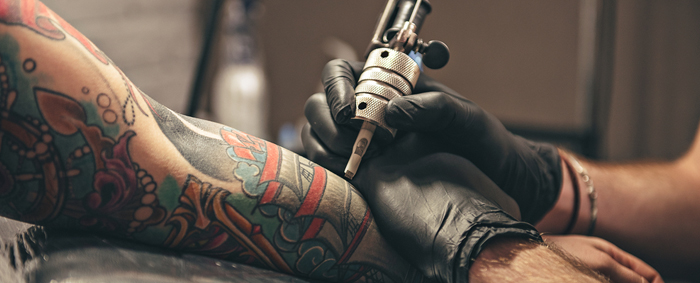
Mastering Smooth Tattoo Shading: Techniques for Seamless Gradients
Anyone can pack black into skin. Making it melt — fading from deep shadow to whisper-soft gray without a single harsh edge — is where tattooing becomes art. Smooth shading is the technique that separates flat, amateur work from pieces that look three-dimensional and alive. And while it takes practice to master, the principles behind it are entirely learnable.
This guide breaks down the mechanics of smooth shading: the needles, the hand, the dilution, and the habits that produce seamless gradients.
What “Smooth Shading” Actually Means
Smooth shading is the gradual transition of value — from dark to light — without visible banding, patchiness, or hard lines. The goal is a gradient so seamless the eye can’t find where one tone ends and the next begins. Achieving it depends on controlling how much pigment you deposit, how evenly you deposit it, and how you blend the edges.
Choosing the Right Needle
Needle selection is your foundation. For smooth shading, magnums are the workhorses.
- Single-stack magnums (M1): Lay pigment softly, ideal for delicate gradients.
- Curved/round magnums (RM): The rounded edge feathers the borders, preventing hard lines and making blends seamless.
- Larger groupings cover more area for big, smooth fields of tone.
If you’re still learning configurations, our needle groupings guide explains each family in detail.
Mastering Dilution and the Gray Wash
One of the most powerful shading tools is the gray wash — black ink diluted to varying strengths to create a ladder of tones. Working from light washes up to full black lets you build value gradually and blend transitions naturally. Many artists keep several pre-mixed wash strengths on hand, moving from lightest to darkest as they build the gradient.
| Wash strength | Use |
|---|---|
| Light wash | Soft highlights, subtle transitions |
| Medium wash | Mid-tones, body of the gradient |
| Dark wash / full black | Deep shadows, anchoring contrast |
Hand Speed and Pressure
Smooth shading lives in the relationship between hand speed and pressure. Move too slowly or press too hard, and you over-saturate, creating dark patches. Move with a consistent, flowing motion and a light, even hand, and the pigment lays down evenly.
- Consistent motion: Keep your hand moving smoothly; pausing creates dark spots.
- Light, even pressure: Let the machine do the work rather than forcing it.
- Build in layers: Multiple light passes blend better than one heavy pass.
Common Shading Techniques
- Whip shading: A flicking motion that fades pigment out toward the lighter end — great for soft gradients.
- Circular shading (pendulum/circles): Overlapping circular motions for even, smooth coverage.
- Pepper shading/stippling: Controlled dots that build texture and subtle gradients.
Each technique suits different effects, and most artists blend several within a single piece.
Avoiding Patchy, Blotchy Results
Patchiness is the most common shading frustration. It usually comes from inconsistent pressure, pausing in one spot, over-saturating, or uneven needle depth. The cures are consistent motion, building tone in light layers, and overlapping your passes so there are no gaps. Patience beats force every time.
The Role of Your Equipment
Smooth shading also depends on a machine and power supply that run consistently. An unstable hit makes even gradients to be impossible. A reliable rotary or a well-tuned coil paired with a stable power supply gives you the predictable performance shading demands. Explore options in our tattoo machines collection.
Practice Strategy
Shading is a skill built through reps. Practice gradients on synthetic skin, focusing on a single smooth transition from black to nothing. Master that, then practice blending two values together, then three. Recording your settings — machine, needle, voltage, wash strengths — lets you reproduce what works.
Frequently Asked Questions
Why is my shading patchy? Usually inconsistent pressure or pausing in spots. Keep your hand moving smoothly and build tone in light layers.
What needle is best for beginners learning to shade? A single-stack or curved magnum is a forgiving starting point for soft gradients.
Should I shade light to dark or dark to light? Many artists build from light washes upward, adding darker tones gradually for smoother control.
How important is the gray wash? Extremely — diluting black into multiple wash strengths is one of the most powerful tools for smooth value transitions.
Final Thoughts
Smooth shading is the heartbeat of dimensional tattooing. Master your needles, build a reliable gray wash ladder, keep your hand consistent and light, and blend in layers rather than forcing it. Put in the reps on practice skin, and you’ll develop the buttery gradients that make tattoos look like they’re lifting off the skin.



Add comment