
Pen-Style vs. Traditional Tattoo Machines: A Complete Comparison
Pick up a pen-style tattoo machine for the first time and something clicks — literally and figuratively. It sits in your hand like the pen you’ve held since childhood, and for a lot of artists that familiarity is a revelation. But “feels familiar” isn’t the same as “right for the job.” Traditional-format machines still dominate plenty of studios for reasons that have nothing to do with nostalgia.
This is a head-to-head look at pen-style versus traditional tattoo machines, so you can choose based on how you actually work instead of what’s trending on social feeds.
What “Pen-Style” Actually Means
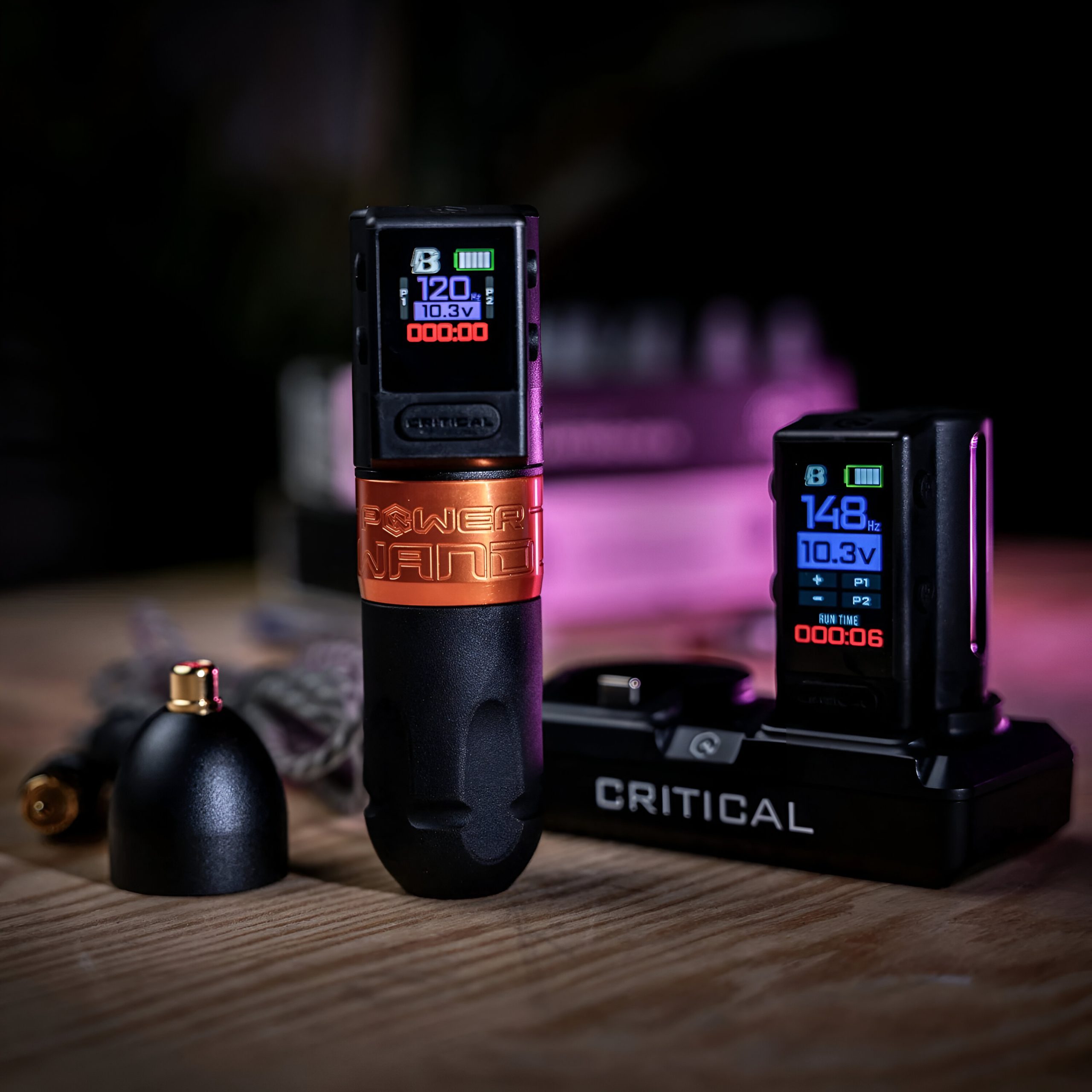
A pen-style machine is a rotary built into a slim, cylindrical body shaped like an oversized marker. The motor, cam, and drive system are tucked inside the barrel, and you hold it the same way you’d hold a pen or pencil. “Traditional” here refers to the more familiar machine silhouette — whether coil or rotary — with a separate grip and a body you cradle rather than write with.
If you’re still deciding between the two underlying drive systems, our guide on choosing between rotary and coil machines is the natural companion to this one.
Ergonomics: The Headline Difference
The single biggest reason artists reach for pen-style is ergonomics. Because you grip it like a writing instrument, the motion feels intuitive, and many people find it reduces hand and wrist fatigue over long sessions.
- Natural grip: Mirrors how you already draw, shortening the learning curve.
- Balanced weight: Weight sits low and centered, which can ease wrist strain.
- Close-to-skin control: Your fingers sit nearer the needle for fine detail.
Traditional machines, by contrast, distribute weight differently and ask your hand to adapt to the tool. Many veterans love that feel precisely because they’ve built years of muscle memory around it.
Feel and Feedback
Coil machines deliver a punchy, tactile hit that experienced artists read like a language. Pen-style rotaries run smoother and quieter, trading some of that raw feedback for consistency and comfort. Neither is “better” — they’re different conversations between hand and skin.
Versatility
Pen-style machines shine at versatility. With adjustable give and a quick cartridge swap, a single pen can line, shade, and pack color. Traditional setups, especially coil, are often tuned more specifically — one machine dialed in for lining, another for shading — which some artists prefer for the precision of a purpose-built tool.
Side-by-Side Comparison
| Factor | Pen-Style | Traditional |
|---|---|---|
| Grip feel | Like a pen, intuitive | Cradled, learned |
| Fatigue | Often lower | Varies by build |
| Feedback | Smooth, quiet | Tactile (esp. coil) |
| Versatility | High (all-in-one) | Often specialized |
| Learning curve | Gentle | Steeper |
Who Should Choose Which?
If you’re newer to the craft, value comfort, or do long, detailed pieces, a pen-style machine is a forgiving and capable choice. If you crave traditional feedback, do high-volume bold work, or simply love tuning your gear, a traditional machine rewards that mastery. Plenty of artists keep both within arm’s reach.
Whichever direction you lean, explore the full range in our tattoo machines collection and feel how different builds sit in your hand before committing.
A Note on Safety and Standards
Whatever machine you choose, safe operation matters more than format. Bloodborne pathogen precautions, single-use components, and proper barrier protection are universal. The U.S. OSHA bloodborne pathogens standard is a useful reference point for the hygiene practices every studio should build around.
Frequently Asked Questions
Are pen-style machines only for beginners? Not at all. Many seasoned professionals use them daily for their comfort and versatility.
Can a pen-style machine do bold traditional work? Yes, with the right cartridge and settings, though some bold-style artists still prefer a coil’s hit.
Do I need different machines for lining and shading? With a versatile pen-style, often no. With traditional coils, many artists keep dedicated machines.
Final Thoughts
Pen-style and traditional machines aren’t rivals so much as different tools for different hands. Try both, run them through real sessions, and let your wrist and your portfolio decide. The best machine is the one that disappears in your grip and lets the art take over.


Add comment