
How to Adjust Needle Depth for Perfect Line Work
Needle depth is one of the most overlooked settings on a tattoo machine, yet it has more influence on line quality than almost any other adjustment. Too shallow and the ink won’t saturate the skin properly; too deep and you risk blowouts, excess trauma, and scarring. Getting depth right is a skill that combines machine setup with hand technique, and it’s worth understanding both.
What Needle Depth Actually Controls
Needle depth determines how far the needle extends past the tip during the downstroke, which directly affects how much ink is deposited and how deep it sits in the skin. For clean line work, the needle only needs to penetrate the dermis by a fraction of a millimeter beyond the epidermis. Too much depth pushes ink into deeper tissue layers where it spreads and blurs over time, while too little leaves ink sitting in the epidermis where it will fade or scab out.
How to Set Depth on Your Machine
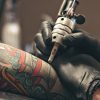
Most modern rotary machines have an adjustable stroke or depth dial near the grip or cartridge housing. Start with the manufacturer’s recommended middle setting, then do test lines on practice skin, adjusting in small increments until the line is crisp and even without excessive trauma. Coil machines require adjusting the armature bar and contact screw instead, which changes both depth and power together, so changes should be made slowly and tested often.
Signs Your Depth Is Off
If lines look patchy, faded, or require multiple passes to saturate, your depth is likely too shallow. If you’re seeing excessive redness, raised welts, pinpoint bleeding, or noticeable blowout around the line, you’re going in too deep. Both issues tend to get worse with pressure and speed, so depth adjustments should always be tested alongside your hand speed and angle before assuming the machine itself is the problem.
Depth Adjustments for Different Line Styles
Fine line and micro-realism work generally call for shallower depth and lighter hand pressure to keep lines crisp and thin. Bold traditional linework can tolerate slightly deeper penetration for saturation and longevity, though still within a narrow safe range. Adjusting depth to match the style you’re tattooing, rather than using one setting for everything, produces more consistent healed results across different projects.
Practicing Depth Control Safely
The best way to build reliable depth control is through consistent practice on synthetic skin at varying angles and speeds, paying attention to how small dial adjustments change the outcome. Keeping notes on which settings worked for which needle groupings and machines helps you return to a reliable starting point on future sessions. Over time, depth control becomes an intuitive part of your hand technique rather than something you have to think about consciously.



Add comment